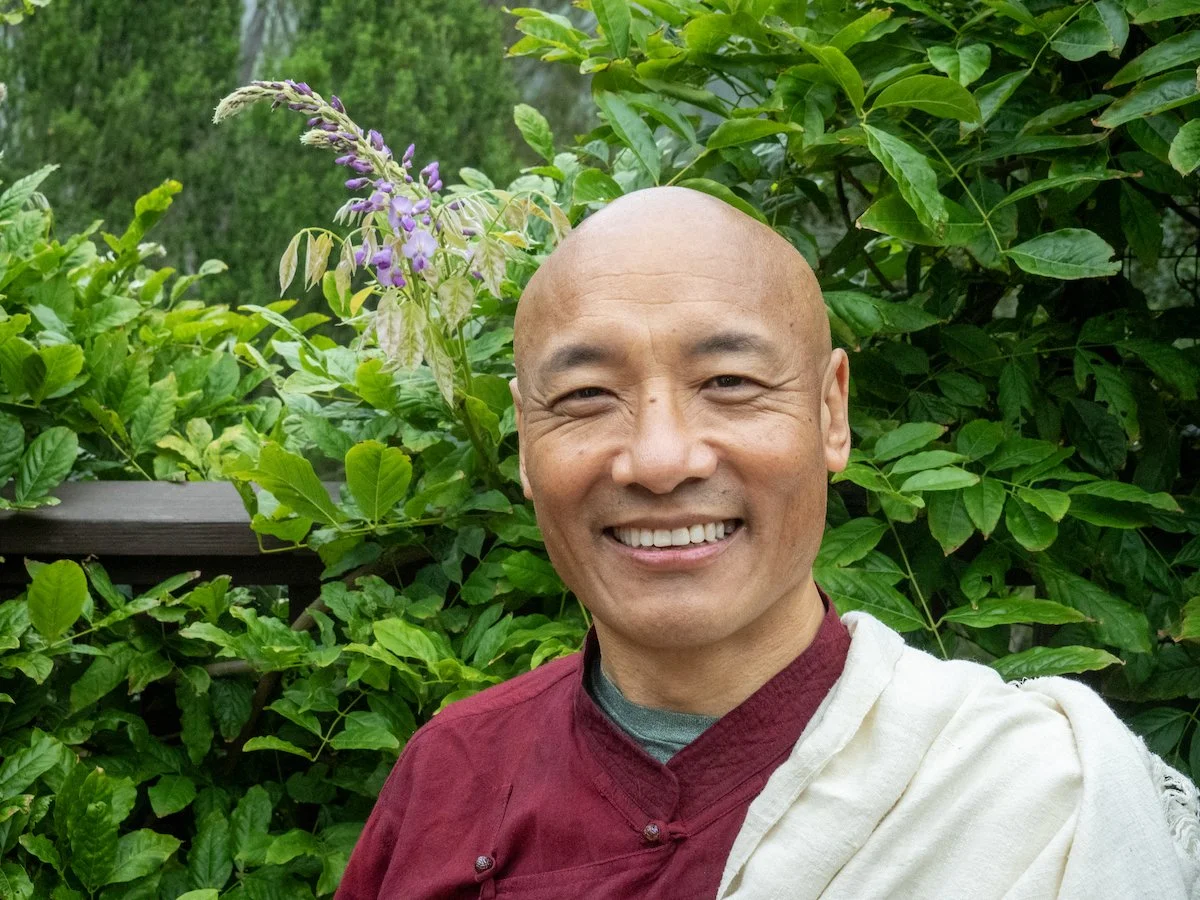
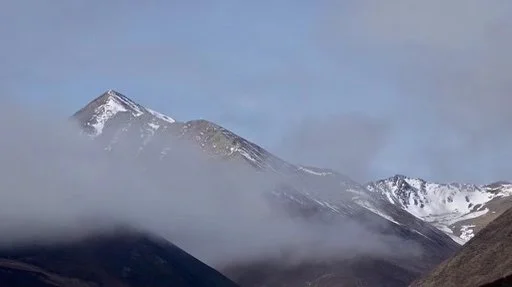
Anam Thubten grew up in the Markog region of Golok, in Eastern Tibet. He was raised by his grandparents, who were devout Buddhists in the Nyingma tradition. Their faith heavily influenced him from an early age, and he developed a strong interest in entering the Buddhist path. He learned how to read when he was very young by reciting prayers and liturgies without anyone’s encouragement. When one of his aunts died, his family and relatives invited monks to perform the Bardo Thodol for forty-nine days for her. At that time, he asked his grandfather’s permission to join all the lamas, much older than him, and he started chanting the Bardo Thodol. From that experience, he decided he wanted to become a sermo (novice monk). This decision was very compelling inside him, despite the fact that there were not many young monks his age because of the political situation that lasted from 1962 to the late 1970s.
After he decided to be a sermo, he began traveling around performing ceremonies for families. He attended Mardo Tashi Gakyil Monastery and met Lama Tsurlo. Lama Tsurlo taught him thangka painting and calligraphy. He also received numerous empowerments and transmissions from him, such as Karma Lingpa’s Zhitro, and the sadhanas of Rigdzin Düddul Dorje and Longsel Nyingpo. He spent a lot of time with Lama Tsurlo and felt he was receiving teachings in every meeting with him. At some point, he decided to take the vow of a monk formally and was ordained as shramanera, also known as gétsül, from Anya Khenpo Lotsul at Darthang Monastery, who gave him the monastic name Thubten Lodro. Also when he was young, Gompa Terchen Jigme Dorje, known as Tulku Lhatsam, formally recognized him as the reincarnation of Anam Chatralwa at the famous mountain Yungdrung Chaktsé, and later gave him the tantric name Padma Chonyid Dorje.
At Mardo Tashi Gakyil Monastery, he also received teachings from Khenpo Chopel and Khenpo Nangdor, and practiced Longchen Nyingthig Ngondro under the guidance of these two masters. He was appointed by the monastery to be one of the vajra masters (dorje lopon) of the tantric ceremonies at the monsoon retreat.
Anam Thubten went on to travel around the Golok region offering ceremonies for families in the role of the vajra master. He continuously took Dharma teachings from lamas and masters from various traditions and backgrounds. He was very interested in writing poetry and essays along with contributing writing to magazines.
One of the principle lamas of the Mardo Tashi Gakyil Monastery, Gonpa Tulku Tradon, on behalf of the monastery requested him to be a khenpo of the monastery and lead the annual monsoon retreat. He accepted but soon after that left Tibet and was unable to fulfill that request. Once out of Tibet, he spent some time in India and then in 1993, he came to the United States. At that time, he began to study English and his main interest was learning to translate the Buddhist texts and teachings. While he was in the United States, he had the great fortune to meet and receive an empowerment from Choje Jigme Phunstok. Even though he met with him for only one day, he felt that meeting was one of the most meaningful moments of his life, one which left a lifelong impact on him.
Besides the teachers mentioned above, he received teachings from many other Buddhist teachers during the course of his life. Among all of those teachers Lama Garwang is another important teacher to him, who he met a very early age. His grandfather used to take him to see Lama Garwang to receive blessings. Later in his life, he had a chance to receive Dzogchen pointing-out instructions from Lama Garwang.
Eventually, Anam Thubten decided to disrobe and not remain as a monk but instead to become a lay person. He was gradually invited by different sanghas to teach and went on to establish the Dharmata Foundation to support his Dharma activities. He began to teach mainly in the United States and now also travels internationally to places such as France, South Korea, Malaysia, Hong Kong, Germany, Spain, England, and Mexico. He has written a number of books in the Tibetan language as well as in English, such as No Self, No Problem; Into the Haunted Ground; Magic of Awareness; Fragrance of Emptiness; Citadel of Awareness; Choosing Compassion; and Voice of Primordial Buddha. His books have been translated into various languages, such as Spanish, German, Korean, French, Polish, and Chinese. Anam Thubten also translates liturgies and sadhanas from Tibetan into English
Anam Thubten